Updated November 2026
Dreaming of retiring on the Costa del Sol? With its Mediterranean lifestyle, beautiful coastline and welcoming international communities, southern Spain has plenty to offer those planning a new chapter abroad.
But before choosing your future home, there are some important practical questions to answer. Do you need a visa to retire in Spain? How much money must you demonstrate? Can you receive your pension while living abroad? And does buying property give you the right to reside in Spain?
The answers depend largely on your nationality, financial circumstances and plans for retirement. This guide explains Spain’s retirement visa requirements in 2026, including the Non-Lucrative Visa, healthcare, taxation and the steps involved in moving to Spain. We’ll also explore what to consider when choosing a home on the Costa del Sol.
Quick Answer: Retiring in Spain at a Glance
| Question | Short answer |
|---|---|
| Is there a “retirement visa” in Spain? | No. Most non-EU retirees use the Non-Lucrative Visa |
| Do EU citizens need a visa? | No. They register with the Spanish authorities |
| Minimum funds in 2026 (main applicant) | €28,800 per year (400% of IPREM) |
| Can I work remotely? | No, not on a Non-Lucrative Visa |
| Initial permit length | One year, then renewals of two years |
| Does buying property give residency? | No. The Golden Visa closed on 3 April 2025 |
Do You Need a Visa to Retire in Spain?
Spain does not have an official visa specifically called a “retirement visa”. However, several residence arrangements allow eligible foreign nationals to spend their retirement in the country.
For many retirees from outside the European Union, the Non-Lucrative Residence Visa is the most relevant option. It allows qualifying applicants to live in Spain without undertaking professional or paid employment, provided they can demonstrate sufficient financial resources and meet the other requirements. EU citizens, on the other hand, benefit from freedom of movement and follow a different registration process.

EU Citizens Retiring in Spain
Citizens of the European Union, European Economic Area (EEA) and Switzerland do not need a Non-Lucrative Visa to retire in Spain. However, if you intend to live in Spain for more than three months, you must meet the relevant residence conditions and register with the Spanish authorities.
For retirees who are not working, these generally include:
- Having sufficient financial resources to support themselves and their family without becoming a burden on Spain’s social assistance system.
- Having comprehensive public or private healthcare coverage in Spain.
- Applying for registration in the Central Register of Foreign Nationals within three months of entering Spain.
Successful applicants receive a registration certificate containing their Foreigner Identity Number (NIE).
Unlike the Non-Lucrative Visa, the EU registration procedure does not impose the same fixed 400% IPREM financial threshold. The authorities assess sufficient resources according to the applicant’s personal and family circumstances.
Official information: Residence rights for EU citizens in Spain (Spanish Government).
British, American and Other Non-EU Retirees
Since the United Kingdom left the European Union, British citizens without rights under the Withdrawal Agreement are generally subject to the immigration rules applicable to non-EU nationals. The same broad distinction applies to American, Canadian and other non-EU citizens.
If you plan to establish your permanent or long-term home in Spain, you will normally need an appropriate residence authorisation. For people who have retired and do not intend to work, the Non-Lucrative Visa is frequently a suitable option.
However, nationality alone does not determine eligibility. Family circumstances, existing residence rights and the nature of your income can all affect the appropriate route.
Spain’s Non-Lucrative Visa: Requirements for 2026
The Non-Lucrative Visa allows eligible non-EU citizens to reside in Spain without carrying out professional or employment activities. It is particularly relevant to retirees who can support themselves through pensions, savings or other qualifying financial resources.
To apply, you must generally:
- Demonstrate sufficient financial means for yourself and any accompanying family members.
- Have qualifying public or private health insurance with an insurer authorised to operate in Spain.
- Have no disqualifying criminal record.
- Meet the applicable health requirements.
- Hold a valid passport and submit the required documentation.
- Pay the relevant administrative fees.
- Satisfy the additional immigration requirements applicable to your circumstances.
Importantly, this residence authorisation is not designed for applicants who intend to continue working remotely or providing paid consultancy services from Spain. If you plan to remain professionally active, you should investigate a residence authorisation compatible with that activity.
Official information: Initial Non-Lucrative Residence Authorisation (Spanish Ministry of Inclusion).
How Much Money Do You Need to Retire in Spain in 2026?
One of the most important conditions for obtaining a Non-Lucrative Visa is demonstrating sufficient financial resources. Spain calculates the minimum requirement using the Indicador Público de Renta de Efectos Múltiples (IPREM), an official financial reference used for different public procedures.
€600 per month
The monthly IPREM for 2026
400% + 100%
400% of IPREM for the main applicant, plus 100% for each accompanying family member
Minimum Financial Requirements in 2026
| Applicant | Monthly equivalent | 12-month requirement |
|---|---|---|
| Main applicant | €2,400 | €28,800 |
| Each additional family member | €600 | €7,200 |
| Couple (one main applicant and one accompanying family member) | €3,000 | €36,000 |
| Couple with one accompanying child | €3,600 | €43,200 |
These figures represent the minimum financial resources calculated for a 12-month period. They are not estimates of the cost of living in Spain or a guarantee that a visa will be approved. The financial requirement for renewal must also be considered over the period for which the renewed residence authorisation is requested.
Official reference: SEPE, IPREM and annual amounts.
Can You Use a Pension or Savings to Qualify?
Yes. Pensions, savings and other eligible financial resources can be relevant when demonstrating sufficient means. For example, a retiree receiving a regular pension may be able to use pension statements and supporting bank documentation to demonstrate their income. Someone relying primarily on accumulated savings may instead need to provide bank statements and other evidence showing that the required resources are available.
Spanish regulations permit different forms of financial evidence, but the suitability of each document depends on the applicant’s circumstances and the applicable consular requirements. It is also worth checking:
- Whether your pension will continue to be paid after moving abroad
- Whether currency fluctuations could affect your available income
- How your financial arrangements will work once you become resident in Spain
Is the Minimum Amount Enough to Live on the Costa del Sol?
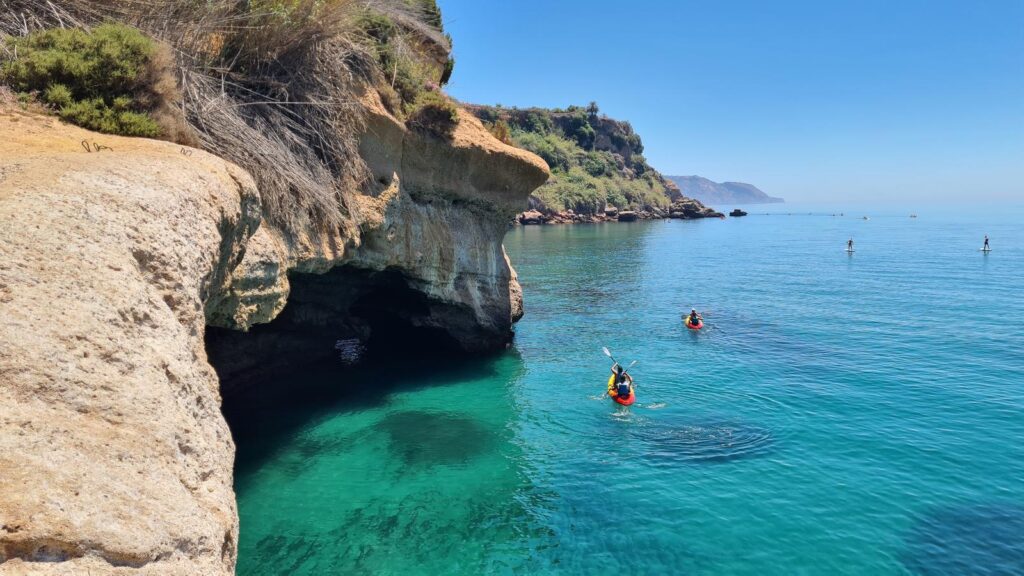
The minimum required for a residence application is not necessarily the amount you will need to enjoy your preferred lifestyle. Your actual retirement budget will depend on where you live, whether you own or rent your home, your healthcare arrangements and your everyday expenses.
A couple living in a privately owned villa in Frigiliana may have very different expenses from someone renting an apartment in central Málaga. Before relocating, prepare a realistic budget covering housing, utilities, insurance, transport, maintenance and leisure.
Documents Needed for a Spanish Non-Lucrative Visa
Preparing your documentation correctly is essential. Missing certificates, incorrect legalisation or outdated documents can delay an application. The principal documentation generally includes:
- Application forms: the official forms required for the residence authorisation and visa procedure, including the applicable EX-01 form.
- Valid passport: a complete copy of a passport or recognised travel document meeting the applicable validity requirements. The Ministry’s guidance specifies a minimum validity of one year.
- Proof of financial resources: bank statements, pension documentation or other acceptable evidence demonstrating sufficient means.
- Health insurance documentation: evidence of qualifying healthcare coverage.
- Criminal record certificate: issued by the relevant authorities of the country of origin or countries of residence during the previous five years, as applicable.
- Medical certificate: confirming compliance with the applicable public health requirements.
- Supporting family documents: where family members are included in the application.
- Proof of payment: evidence of payment of the relevant visa and residence authorisation fees.
Translations, Apostilles and Legalisation
Documents issued outside Spain may require official translation and legalisation or an apostille, depending on the country of origin and the document concerned. Where required, translations must be carried out by an authorised sworn translator.
Before paying for translations or collecting time-sensitive certificates, consult the Spanish consulate responsible for your place of legal residence. Document validity periods and appointment procedures may vary, and preparing everything too early can create unnecessary complications.
How to Apply for a Non-Lucrative Visa in Spain
Although procedural details depend on the relevant consulate, the main stages follow a defined sequence.
Step 1: Identify the Correct Spanish Consulate
Applications for an initial Non-Lucrative Residence Visa are normally submitted through the Spanish consular office responsible for your place of legal residence. Check its published instructions, appointment procedures and specific documentary requirements.
Step 2: Prepare Your Application
Gather the necessary financial evidence, insurance documentation, criminal record certificate, medical certificate and other supporting documents. Confirm whether translations or legalisation are required before submitting your application.
Step 3: Submit the Application and Pay the Fees
Submit your application according to the procedures established by the consulate. The visa process incorporates the request for the corresponding initial residence authorisation. Administrative fees apply.
Step 4: Await the Decision
The competent Spanish authorities examine the residence authorisation application and the consular office processes the visa. The Ministry’s guidance specifies a maximum one-month period for the competent authority to decide on the residence authorisation, calculated from receipt of the consular communication. This should not be confused with a guaranteed overall visa-processing time.
Avoid making irreversible travel or property commitments based solely on an expected approval date.
Step 5: Collect Your Visa and Enter Spain
Once the visa has been granted, the applicant has one month from notification to collect it personally. After collection, entry into Spain must take place within the visa’s validity period, which cannot exceed three months.
Step 6: Apply for Your Foreigner Identity Card (TIE)
Within one month of entering Spain, you must personally apply for your Tarjeta de Identidad de Extranjero (TIE) at the competent police office. This card documents your legal residence status in Spain. The initial Non-Lucrative Residence Authorisation is generally valid for one year, beginning on the date of entry into Spain.
Healthcare for Retirees Living in Spain

Healthcare is an important consideration when planning retirement abroad. Non-Lucrative Visa applicants must have qualifying public or private health insurance with an insurer authorised to operate in Spain.
Not every international travel insurance policy or insurance product marketed to expatriates will satisfy the immigration requirements. Before purchasing a policy, verify the conditions required by the Spanish authorities and the relevant consulate.
Can Foreign Retirees Use Spain’s Public Healthcare System?
Access to public healthcare depends on your individual entitlement, nationality and applicable social security arrangements. Some pensioners may qualify through Spanish social security rights, European coordination rules or an applicable international agreement. Others may need to maintain private health insurance.
It is important not to assume that holding a residence permit automatically provides unrestricted access to publicly funded healthcare. For retirees receiving pensions from another country, the relationship between their pension arrangements and healthcare entitlement should be checked before moving.
Official information: Spanish Social Security, healthcare entitlement.
Tax Residency: What Changes When You Retire in Spain?
Obtaining legal residence and becoming a Spanish tax resident are not the same thing. Under Spanish domestic tax rules, an individual may generally be considered tax resident if they:
- Spend more than 183 days in Spain during a calendar year, subject to the applicable rules for calculating presence and absences.
- Have their main centre or base of economic activities or interests in Spain, directly or indirectly.
Spanish law also provides a rebuttable family-related presumption of tax residence in certain circumstances. Double-taxation treaties may affect the final determination when two countries consider the same person resident.
Will Your Foreign Pension Be Taxed in Spain?
The tax treatment of a foreign pension depends on several factors, including the type of pension, your country of origin, your tax residence and the applicable double-taxation treaty. Private pensions and certain public service pensions may be treated differently.
For this reason, it is important to review your position with a qualified tax adviser before becoming resident. Property ownership, overseas investments and other assets may also create additional tax obligations depending on your circumstances.
Official information: Spanish Tax Agency, tax residence of individuals.
How to Renew Your Non-Lucrative Residence Permit
An initial Non-Lucrative Residence Authorisation generally lasts one year. If you wish to continue living in Spain, you must apply for renewal and demonstrate that you still meet the relevant conditions. These include:
- Maintaining sufficient financial resources for the renewal period.
- Maintaining the required health insurance.
- Meeting the applicable criminal record and immigration conditions.
- Having resided genuinely and effectively in Spain for more than 183 days during the calendar year, as required under the renewal rules.
- Providing any additional documentation required for your circumstances.
The renewal application should normally be submitted during the two months before the current authorisation expires. Applications may also be submitted during the following three months, although late submission may give rise to administrative consequences.
A renewed Non-Lucrative Residence Authorisation is generally valid for two years, unless the person qualifies for another form of residence, such as long-term residence.
If you intend to divide your retirement between Spain and another country, pay particular attention to the residence requirements. Spending extended periods outside Spain can affect your ability to renew.
Official information: Ministry of Inclusion, renewal of non-lucrative residence.
Can You Buy Property in Spain Without Residency?

Yes. Foreign nationals can generally purchase residential property in Spain without first obtaining Spanish residence. However, buying a house and obtaining the right to live in Spain are separate legal processes.
Purchasing a villa does not, by itself, grant the owner permission to reside permanently in Spain. This distinction is particularly important for non-EU buyers planning to spend their retirement on the Costa del Sol.
What Happened to Spain’s Golden Visa?
Spain discontinued its investor residence route, widely known as the Golden Visa, for new applications from 3 April 2025. This means purchasing an expensive property is no longer a route to obtaining a new investor residence authorisation under that scheme.
Transitional arrangements apply to certain applications submitted before the change and to qualifying existing authorisations. If you are planning to buy a villa in Spain, your property purchase and your immigration arrangements should therefore be considered independently.
Official legislation: Spanish Official State Gazette, Law 14/2013 and subsequent amendments.
What Should International Buyers Consider?
If you are buying property in Spain from abroad, several practical matters deserve attention:
Your NIE
Foreign buyers generally need a Spanish identification number for transactions involving economic interests in Spain.
Legal checks
Before signing a purchase agreement, verify the property’s ownership, registered characteristics, charges and legal status.
Purchase costs
Allow for applicable taxes, notary and registration expenses, and any professional fees associated with the transaction.
Property suitability
Accessibility, maintenance, year-round services and proximity to everyday amenities can become increasingly important during retirement.
A professional legal review is strongly recommended before committing to a purchase. You can learn more about Spanish property transactions through the Spanish Government’s property purchase guidance.
Why Retire on the Costa del Sol?

For many international buyers, the Costa del Sol offers an attractive combination of outdoor living, established towns, cultural experiences and access to services. The region is not limited to beach holidays. It offers very different settings for permanent residents, from larger cities to coastal communities and traditional Andalusian villages.
A Mediterranean lifestyle
Mild winters and plenty of opportunities for outdoor activities: coastal walks, local markets, the mountains or one of the area’s historic towns.
Connections and services
The province of Málaga offers international travel connections, healthcare facilities, cultural attractions and a broad range of services.
A wide choice of homes
From modern apartments close to the beach to detached villas, village houses and properties surrounded by nature.
A Mediterranean Lifestyle
Mild winters and plenty of opportunities for outdoor activities are among the region’s principal attractions. Depending on where you choose to settle, everyday life might include coastal walks, visiting local markets, enjoying the mountains or spending time in one of the area’s historic towns.
International Connections and Everyday Services
The province of Málaga offers international travel connections, healthcare facilities, cultural attractions and a broad range of services. For retirees, however, the specific location matters. Living near shops, public transport and medical facilities can be very different from owning a secluded villa in the countryside.
A Wide Choice of Homes and Locations
The Costa del Sol offers everything from modern apartments close to the beach to spacious detached villas, traditional village houses and properties surrounded by nature. The right choice depends on your budget, mobility, preferred level of privacy and plans for everyday life.
Where to Retire on the Costa del Sol
Choosing where to live is just as important as understanding how to obtain residency. While the Costa del Sol includes well-known destinations such as Marbella and Estepona, the eastern part of Málaga province is particularly appealing to buyers looking for a combination of traditional Andalusian character and Mediterranean living.
Nerja: Coastal Living with Everyday Convenience
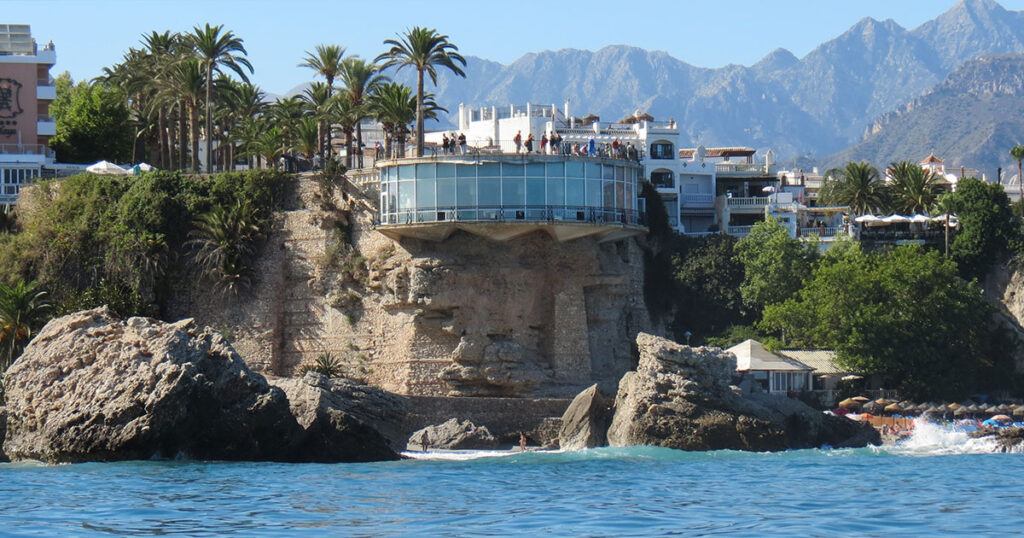
Nerja combines beaches, restaurants, residential neighbourhoods and established local services. Its mixture of coastal living and everyday convenience makes it worth considering for retirees who want to enjoy the Mediterranean without feeling isolated.
Different parts of Nerja offer different lifestyles. A property near the centre or beaches may suit someone who prefers to walk to shops and restaurants, while more residential settings may appeal to buyers seeking extra space and privacy. For international buyers, understanding these differences can be more useful than simply choosing a property based on its sea views. Our guide to the best neighbourhoods in Nerja compares each area in detail.
Frigiliana: Traditional Andalusian Charm

Set in the hills above Nerja, Frigiliana is known for its whitewashed architecture, narrow streets and mountain surroundings. It appeals to buyers who value traditional character, quieter surroundings and proximity to nature. Property options can include restored village houses, countryside homes and contemporary villas in the surrounding area.
Before buying, consider access roads, parking, gradients and proximity to essential services. These practical details can make a significant difference when choosing a home for retirement.
Málaga: Culture and City Life

For those who prefer an urban lifestyle, Málaga offers museums, restaurants, public transport and a broad range of services. It may appeal to retirees who want easy access to cultural activities and everyday amenities without relying heavily on a car.
The choice between Málaga city and the quieter eastern Costa del Sol ultimately depends on what you want your daily life to look like.
Frequently Asked Questions About Retiring in Spain
Start Your Next Chapter on the Costa del Sol
Planning your retirement in Spain involves more than choosing the right visa. It means deciding where you want to live, what kind of home suits your lifestyle and how you want to spend the years ahead.
Whether you prefer the coastal atmosphere of Nerja or the peaceful surroundings of Frigiliana, finding the right property is an important part of making that move feel like home.
Disclaimer: This article provides general information based on Spanish official regulations and administrative guidance available as of November 2026. It does not constitute immigration, legal or tax advice. Requirements may differ according to nationality, family circumstances and the applicable consular procedure. Always consult the relevant Spanish authorities and qualified professionals before making financial or relocation decisions.


